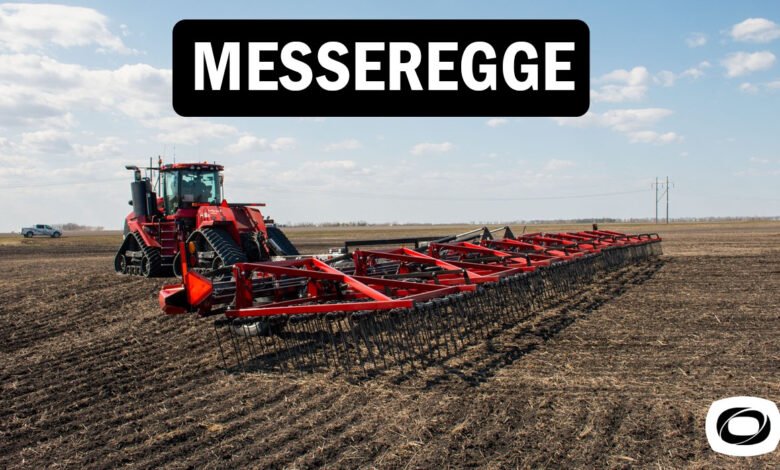
Messeregge is a traditional European farming tool that many people have never heard of, but it plays a big role in modern agriculture. The word comes from two German words: “Messer,” which means knife, and “Egge,” which means harrow. Put them together, and you get “knife harrow,” a smart blade-based tool that farmers use to prepare soil for planting. Unlike heavy machines that dig deep and flip the soil upside down, the Messeregge gently slices through the top layer. Whether you are a farmer, an agriculture student, or simply curious about farming tools, this guide will help you understand what the Messeregge is, how it works, and why it still matters today.
What Does Messeregge Mean?
The meaning of Messeregge is simple and direct. “Messer” means knife or blade in German, and “Egge” means harrow. A harrow is a farming tool used to break up and smooth out soil after plowing. So, a Messeregge is basically a harrow that uses sharp blades instead of teeth or spikes.
This term has been used for decades in German-speaking farming communities. It was never widely adopted in English, which is why many people outside Europe find the word unfamiliar. However, as interest in sustainable farming grows around the world, more farmers and researchers are learning about this useful tool.
How Does a Messeregge Work?
A Messeregge uses rows of sharp, flat steel blades arranged in a frame. When a tractor pulls it across a field, these blades slice through the top 2 to 5 centimeters of soil. They cut through hard surface crusts, break apart clumps of dirt, and chop up leftover plant material from the last harvest.
The key difference between a Messeregge and other harrows is the cutting action. Traditional harrows use flexible teeth that drag through the soil and pull it apart. Disc harrows rotate and flip the soil aggressively. The Messeregge, on the other hand, cuts cleanly without turning the soil over. This keeps the deeper layers of soil undisturbed, which protects helpful organisms like earthworms and bacteria that live underground.
Why Do Farmers Use a Messeregge?
Farmers choose the Messeregge for several practical reasons. The most important one is seedbed preparation. After a field has been plowed, the surface is usually rough and uneven. Seeds need a smooth, fine surface to make good contact with the soil. The Messeregge creates exactly that kind of surface by crushing clods and leveling the ground.
Another big reason is residue management. After harvesting crops like wheat or corn, a lot of stems and plant material remain on the field. The Messeregge slices through this residue, helping it break down faster and mix into the topsoil. This adds nutrients back to the soil naturally. Farmers also save time and fuel because many Messeregge units can be mounted on the front of a tractor, allowing them to prepare the soil and plant seeds in a single pass across the field.
Benefits of Using a Messeregge
One of the biggest benefits of the Messeregge is that it protects soil health. Since it only works on the top layer, the deeper soil structure stays intact. This helps the soil hold moisture better and reduces the risk of erosion from wind and rain. Healthy soil means healthier crops and better harvests over time.
The Messeregge also saves money. It requires less tractor power than heavier equipment, which means lower fuel costs. The blades are easy to maintain, and farmers can replace worn-out blades without much expense. On top of that, because the tool allows single-pass operations, farmers spend less time in the field. This makes the Messeregge a cost-effective choice for farms of all sizes, from small family operations to large commercial farms.
Where Is the Messeregge Used?
The Messeregge has deep roots in German and Austrian farming traditions. It is widely used across Central and Western Europe, where conservation agriculture and reduced tillage practices are common. Countries like Germany, Austria, France, and the Netherlands have been using this tool for decades.
In recent years, the Messeregge has started gaining attention beyond Europe. Farmers in North America, Australia, and other regions are exploring it as part of their sustainable farming strategies. Well-known European manufacturers like Kerner, Fliegl, and Dalandtechnik produce high-quality Messeregge equipment that is designed to work with modern GPS-guided tractors and precision farming systems.
Messeregge vs. Traditional Harrows
Many people wonder how the Messeregge compares to other types of harrows. Traditional tine harrows use flexible metal teeth to scratch and loosen the soil. They work well for light finishing but often struggle with heavy clods or thick crop residue. Disc harrows are more powerful but can be too aggressive, flipping the soil and destroying its natural structure.
The Messeregge sits right in the middle. It is stronger than a tine harrow but gentler than a disc harrow. Its cutting blades handle tough clods and residue effectively without causing too much disturbance to the soil. This makes it an ideal choice for farmers who practice conservation tillage or no-till farming, where protecting soil health is a top priority.
The Future of Messeregge in Modern Farming
Modern agriculture is moving toward practices that are both productive and sustainable. Rising fuel costs, stricter environmental rules, and growing awareness of soil health are pushing farmers to adopt smarter tools. The Messeregge fits perfectly into this shift because it delivers results with less energy and less soil damage.
New versions of the Messeregge now come with advanced features like hydraulic pressure control, quick-change blade systems, and compatibility with GPS-guided tractors. These upgrades make the tool even more precise and efficient. As farms around the world look for ways to grow more food while protecting the environment, the Messeregge is set to become an even more important part of the farming toolkit.
Conclusion
The Messeregge is a simple yet powerful farming tool that has earned its place in modern agriculture. It prepares smooth seedbeds, manages crop residue, and protects soil health, all while saving farmers time and fuel. With roots in European farming traditions and growing popularity worldwide, this blade harrow proves that sometimes the best solutions are the ones that work with nature, not against it.
Frequently Asked Questions
What is a Messeregge used for?
A Messeregge is used for shallow soil preparation. It breaks up surface clumps, levels the ground, and cuts through crop residue to create a smooth seedbed for planting.
Is a Messeregge the same as a disc harrow?
No, they are different tools. A disc harrow uses rotating discs that dig deep and flip the soil. A Messeregge uses flat steel blades that slice through only the top 2 to 5 centimeters, keeping the deeper soil layers untouched.
What does the word Messeregge mean?
Messeregge is a German word made up of “Messer” (knife) and “Egge” (harrow). It translates to “knife harrow” or “blade harrow” in English.
Which brands make Messeregge equipment?
Some well-known European manufacturers include Kerner, Fliegl, and Dalandtechnik. These companies produce durable and precise blade harrow systems designed for modern farming.
Can small farms use a Messeregge?
Yes, the Messeregge works well for farms of all sizes. Smaller models are available that require less tractor power, making them affordable and practical for small family farms.
Discover more fascinating content at Fusio News